
40ft High Cube Shipping Containers
The favorite for living in — that extra foot leaves a real ceiling after insulation.
Measurements at a Glance
| External dimensions | 40' × 8' × 9'6" |
| Internal dimensions | 39'5" × 7'8" × 8'10" |
| Door opening | 7'8" × 8'5" |
| Interior ceiling | 8'10" |
| Floor area | ~304 sq ft |
| Empty weight | ~8,775 lbs |
| Cubic capacity | ~2,700 cu ft |
How the Sizes Compare
| 20ft STD | 20ft HC | 40ft STD | 40ft HC | |
|---|---|---|---|---|
| Floor area | ~146 sq ft | ~146 sq ft | ~304 sq ft | ~304 sq ft |
| External height | 8'6" | 9'6" | 8'6" | 9'6" |
| Interior ceiling | 7'10" | 8'10" | 7'10" | 8'10" |
| Cubic capacity | ~1,170 cu ft | ~1,320 cu ft | ~2,390 cu ft | ~2,700 cu ft |
40ft High Cube — Every Grade in Stock

40ft High Cube
The favorite for living in — a real ceiling after insulation.
From $4,500
40ft High Cube
The favorite for living in — a real ceiling after insulation.
From $2,450

40ft High Cube
The favorite for living in — a real ceiling after insulation.
From $2,000

40ft High Cube
The favorite for living in — a real ceiling after insulation.
From $1,600
A Few Ways to Lay It Out
Studio
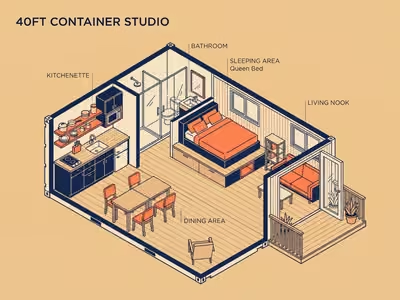
Open plan — great for solo living.
1-Bedroom
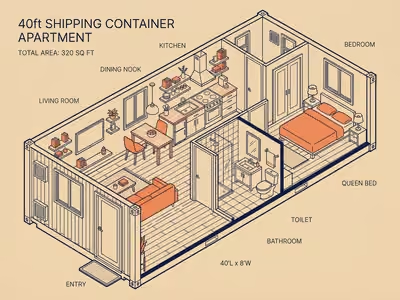
Bedroom + bath + kitchen + living.
Dual-Use
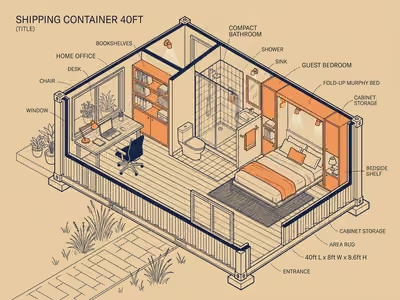
Office by day, guest room at night.
A Few Things People Ask
Around here it runs from about $2,000 for a Wind & Water Tight up past $4,500 for a One-Trip.
Close to 280 sq ft once it's insulated, with about 8ft overhead — roughly a studio apartment's worth of space.
They're built to stack many high when loaded, so a two-story build works — you'll just need an engineered footing and proper connection plates.
Usually yes — the tilt-bed handles most south-metro addresses as long as there's about 100ft of straight room to work with.